

Northern Geo geothermal equipment
Geothermal Heat Pump Products for Residential and Commercial Systems
Explore forced-air geothermal heat pumps, split configurations, hydronic equipment, water-to-water pathways, fan coils, and replacement-system options.
Product selection should begin with the building loads, application, ground-loop conditions, distribution system, electrical requirements, equipment configuration, controls, and available installation space.
Confirm the heating and cooling loads, design conditions, entering-water temperatures, airflow or water flow, electrical requirements, equipment orientation, controls, dimensions, and distribution-system compatibility.
Product selection begins with the system
Match the Equipment to the Building and Application
Geothermal equipment must operate as part of a complete ground-source heating and cooling system.
The heat pump must be coordinated with the ground loop, pumping, antifreeze, ductwork or hydronic distribution, ventilation, thermostats, zoning, electrical service, auxiliary heat, condensate management, and controls.
A product that fits the available space may still be inappropriate when its capacity, airflow, water flow, voltage, operating temperatures, or control requirements do not match the project.
Review the product-selection guideNorthern Geo product families
Explore Geothermal Equipment and Hydronic Products
Use these product pathways to narrow the system type before reviewing model-specific manuals, specifications, performance data, and options.
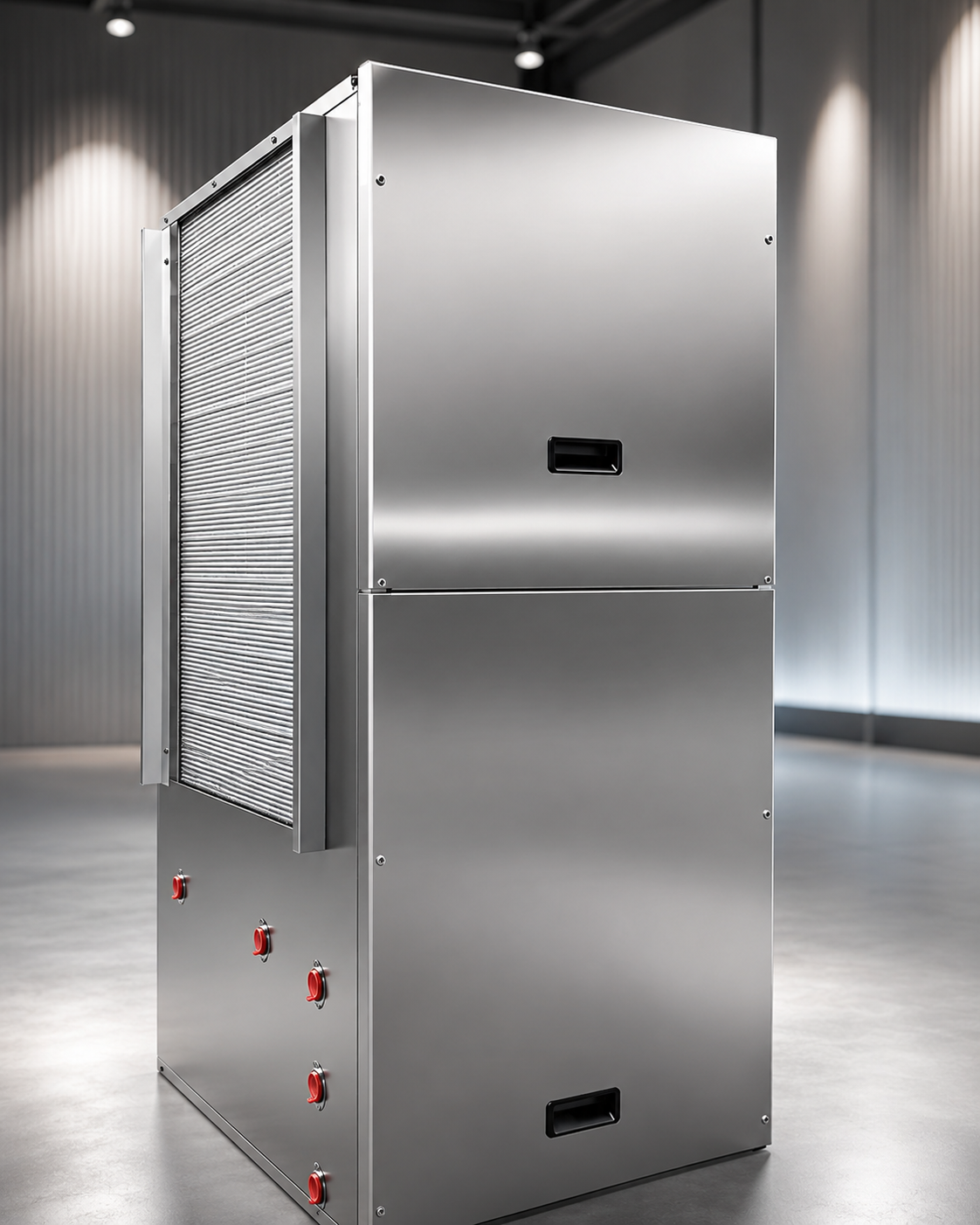 Forced-air geothermal
eSeries geothermal heat pumps
Compact Two-Stage Forced-Air Geothermal
The eSeries product pathway is intended for ducted residential and light-commercial heating and cooling applications requiring a compact two-stage geothermal configuration.
- Ducted heating and cooling
- Two-stage equipment pathway
- Compact indoor-cabinet design
- New-construction and replacement applications
- Requires verified airflow and duct design
- Requires compatible loop flow and temperatures
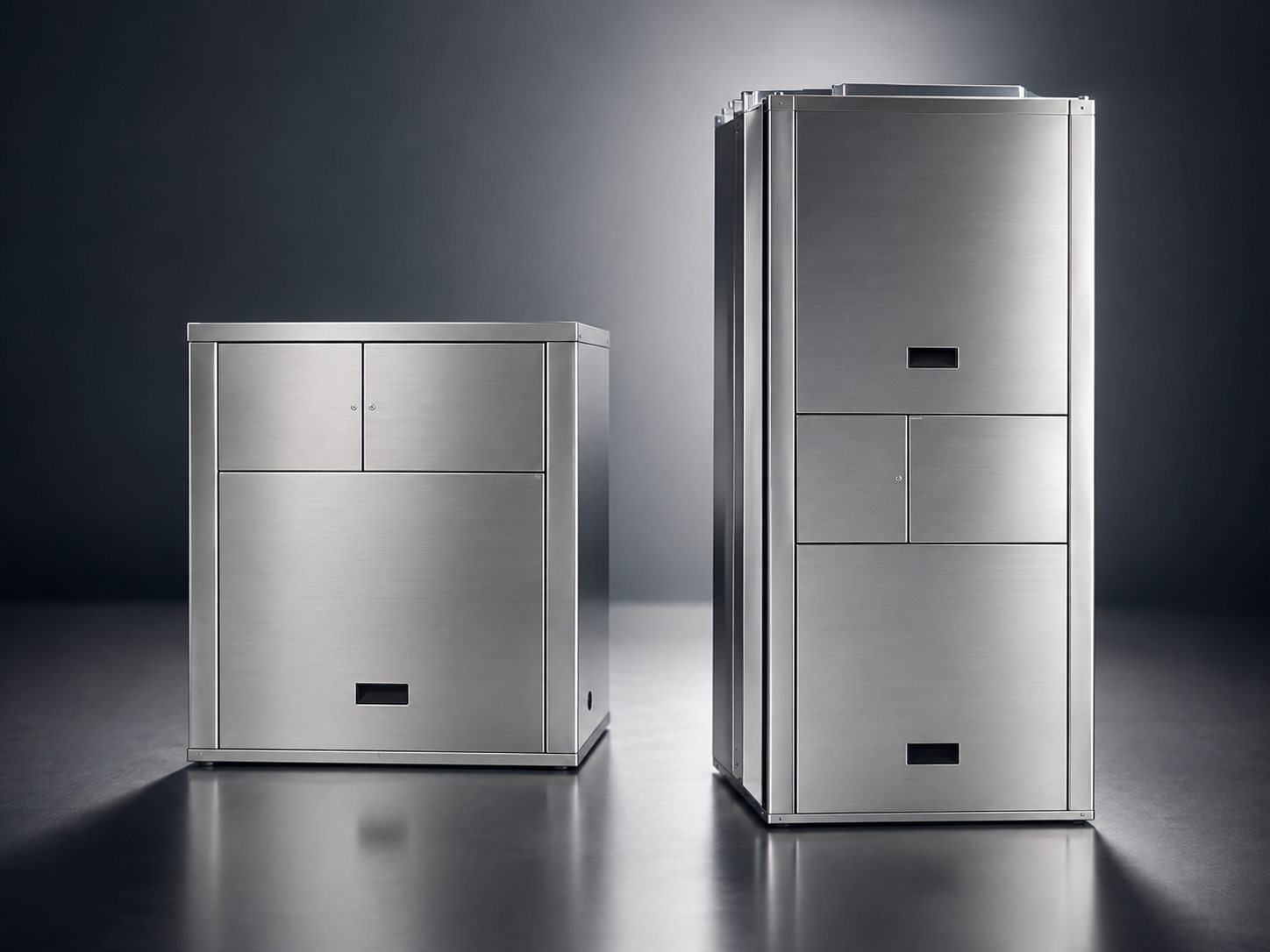 Multiple configurations
Stainless Steel Series
Flexible Geothermal Product Configurations
The Stainless Steel Series pathway supports multiple geothermal equipment arrangements for residential and light-commercial applications.
- Forced-air configurations
- Split-system pathways
- Two-stage equipment options
- Hydronic equipment pathways
- Residential applications
- Light-commercial applications
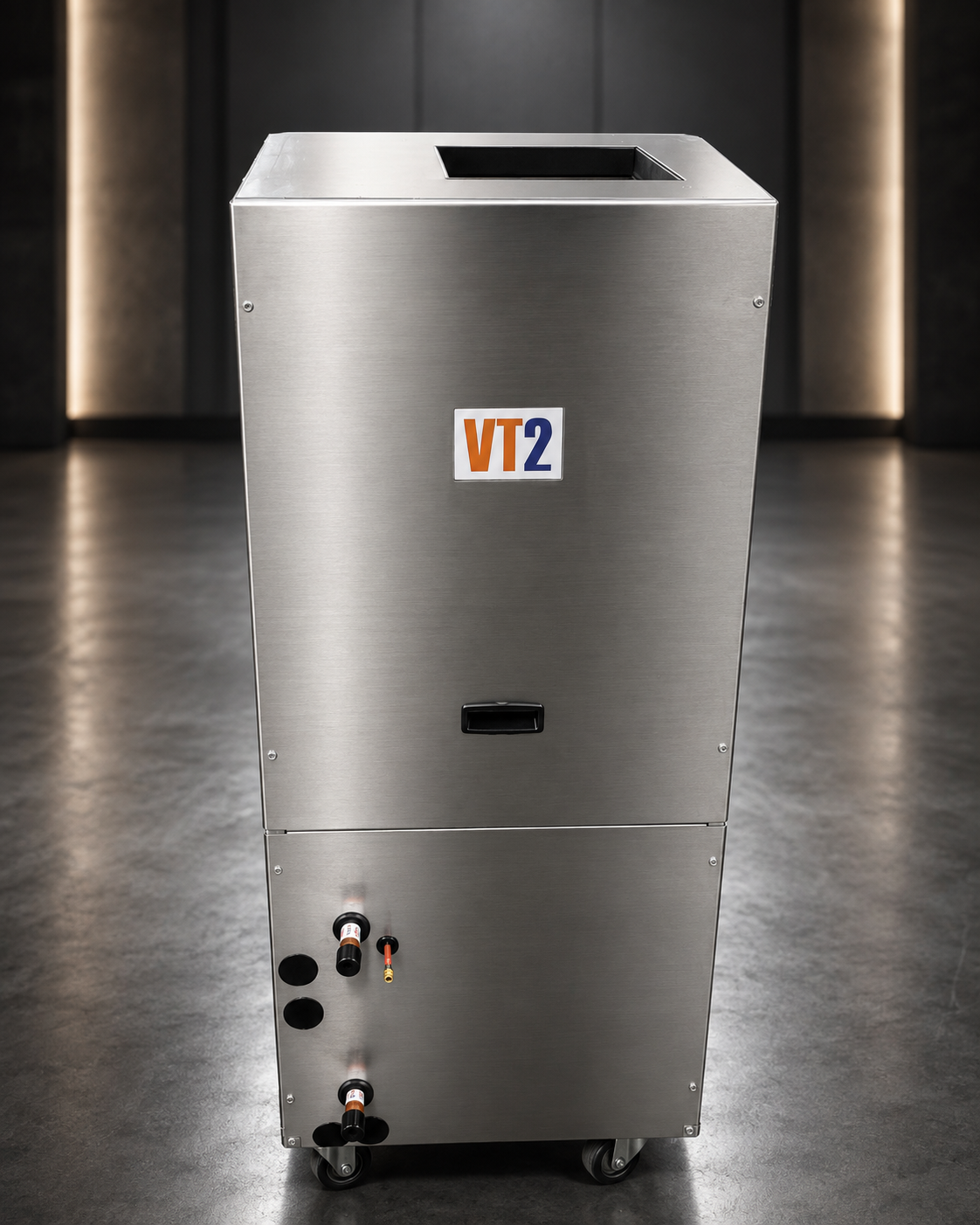 Hydronic fan coil
VT2 Vara-Therm 2
Compact ECM Hydronic Fan Coil
The VT2 Vara-Therm 2 provides an air-distribution pathway for compatible heated-water and chilled-water systems where a compact hydronic fan coil is appropriate.
- Hydronic air-handler application
- ECM blower-motor pathway
- Upflow or horizontal installation pathway
- Coordinates with compatible water systems
- Requires verified airflow and duct design
- Requires proper condensation control when cooling
Geothermal configurations
Understand the Main Equipment Pathways
The configuration determines how geothermal energy is delivered to the building and which supporting systems are required.
Packaged Forced-Air
The refrigeration system and blower are contained in one indoor cabinet connected to the building’s duct system.
- Distribution
- Ductwork
- Provides
- Heating and cooling
- Key review
- Airflow and static pressure
Split Geothermal
The geothermal refrigeration section is separated from the compatible air handler or distribution equipment.
- Distribution
- Matched air handler
- Provides
- Heating and cooling
- Key review
- Matched components
Water-to-Water Geothermal
The geothermal heat pump produces heated or chilled water for a compatible hydronic distribution system.
- Distribution
- Hydronic water system
- Applications
- Radiant and fan coils
- Key review
- Water temperatures
Hydronic Fan Coil
A fan coil transfers energy between a compatible water system and building air through a coil and blower assembly.
- Distribution
- Ducted air
- Energy source
- Heated or chilled water
- Key review
- Water and airflow data
Application-based product selection
Begin with the Building, Not Only the Product
Residential, commercial, replacement, hydronic, and specialty applications often require different equipment configurations, controls, supporting components, and documentation.
Residential Geothermal
New homes, existing homes, replacements, additions, forced-air, split, and hydronic applications.
Commercial Geothermal
Offices, public buildings, multifamily properties, institutional facilities, and engineered systems.
New Construction
Coordinate equipment, loop design, distribution, electrical service, controls, and mechanical space early.
Replacement Equipment
Evaluate the original equipment, current loads, ground loop, distribution system, dimensions, and controls.
Product-selection guide
Compare the Conditions That Affect Equipment Selection
Each requirement should be confirmed before final product selection and ordering.
Heating and Cooling Capacity
Use project-specific load calculations and equipment performance at the expected loop and airflow conditions.
Entering-Water Temperatures
Equipment capacity and efficiency change with the temperatures delivered by the ground-loop system.
Loop Flow and Pressure Drop
Confirm required flow, available pumping, antifreeze concentration, piping losses, and heat-exchanger pressure drop.
Airflow and Ductwork
Forced-air equipment requires proper airflow, external static pressure, filter selection, duct sizing, and blower setup.
Hydronic Water Temperatures
Water-to-water equipment must be evaluated at the temperatures required by radiant floors, fan coils, or other terminal equipment.
Voltage and Phase
Match the equipment and accessories to the available electrical service, branch circuits, disconnects, and auxiliary heat.
Cabinet and Orientation
Verify dimensions, return-air orientation, supply-air orientation, water connections, drains, and service clearances.
Controls and Accessories
Confirm thermostats, staging, pumps, zoning, sensors, auxiliary heat, hot-water options, alarms, and building controls.
Geothermal replacement equipment
Replacement Requires More Than Matching the Old Tonnage
Existing geothermal equipment may have been selected for building conditions, loop temperatures, controls, and loads that have changed since the original installation.
Identify the Original Equipment
Record the complete brand, model, serial number, voltage, phase, capacity, orientation, and factory options.
Evaluate the Current Building
Review additions, insulation changes, window replacements, occupancy changes, ventilation, and current loads.
Test the Existing System
Confirm loop temperatures, water flow, airflow, ductwork, pumping, antifreeze, electrical service, and controls.
Confirm Installation Compatibility
Compare dimensions, connection locations, duct orientation, piping, drains, filters, wiring, and service clearances.
Technical product resources
Confirm the Exact Product Before Using Technical Documents
Similar equipment may have different electrical, control, airflow, water-flow, installation, or service requirements.
Installation Manuals
Find placement, piping, ductwork, electrical, condensate, startup, and installation information.
Browse installation documents → 02Specifications and Submittals
Review dimensions, connections, electrical data, capacities, options, airflow, water flow, and performance information.
Find product data → 03Wiring Diagrams
Locate model-specific electrical, control, motor, sensor, safety, relay, and accessory information.
Find wiring documents → 04Technical Support
Submit equipment details, fault codes, symptoms, measurements, photographs, and troubleshooting history.
Contact technical support →Product-selection process
From Project Information to Equipment Selection
Define the Application
Identify the building type, system type, project location, distribution system, and project stage.
Confirm Design Conditions
Gather the loads, loop temperatures, water flow, airflow, electrical service, and operating requirements.
Select the Configuration
Determine whether packaged forced air, split, water-to-water, or hydronic fan-coil equipment best matches the project.
Verify Before Ordering
Confirm the model, voltage, orientation, options, accessories, controls, dimensions, shipping, and installation responsibilities.
Geothermal product FAQs
Common Equipment-Selection Questions
Final product selection depends on the building, loads, ground loop, distribution system, electrical service, controls, and installation.
Request product assistanceA packaged forced-air system contains the refrigeration system and blower in one cabinet. A split system separates the geothermal refrigeration section from the compatible air handler or distribution equipment.
Water-to-water geothermal equipment produces heated or chilled water for compatible radiant floors, hydronic fan coils, buffer tanks, or other properly designed hydronic systems.
Square footage may support initial screening, but final selection should use heating and cooling loads, climate, construction, ground-loop conditions, distribution, airflow, and water flow.
An existing loop may be reusable when its condition, capacity, flow, pressure drop, antifreeze, temperatures, pumping, and compatibility with the replacement equipment are confirmed.
Provide the original brand, model, serial number, voltage, configuration, capacity, dimensions, airflow, water flow, controls, photographs, current loads, and reason for replacement.
Use the Manuals and Downloads page and search by the complete product model. Confirm that the document includes the exact equipment configuration, voltage, capacity, and revision.
Find the right geothermal equipment
Submit Your Loads, Application, Loop, and Distribution Information
Provide the project location, building type, heating and cooling loads, loop conditions, airflow or water-flow requirements, electrical service, plans, and desired timeline.